
 中文
 عربي
 Français
 Nederlands
 Deutsch
 Italiano
 Português
 Español
To plan a Masai Mara Serengeti safari, choose how you will cross from Kenya to Tanzania, time the trip to the Great Migration, give each park at least three nights, and request a private quote from an operator who handles both countries. Seven to ten days is the practical range. Private from-prices for this kind of trip run from about $2,700 to $5,400.
The difficulty is that these are two parks in two countries, with separate park systems, entry rules and logistics. There is no simple tourist road between them. Search results mix package listings with park comparisons, and few tell you how the border works, which month suits which herd movement, or why one itinerary costs twice another. You can lose weeks sorting that out before you send a single enquiry.
This guide opens with whether combining the parks is worth it, then gives four steps: the crossing, the timing, the trip length and budget, and the booking. Extra Miles Unique Adventures is a Nairobi-based operator that has designed private East Africa safaris since 2007. The advice below reflects how these trips are built.
Why combine the Mara and the Serengeti
Combine them if you have seven days or more. The two parks offer different safaris within one wildlife system, and with fewer days you will spend most of the trip in transit.
One ecosystem, two countries
The Masai Mara is the northern end of the Serengeti ecosystem. Roughly 1.5 million wildebeest follow a yearly loop across the border, so a Serengeti and Masai Mara safari lets you meet the same migration in two settings. The animals ignore the border. You do not, because each country has its own park fees, rules and entry requirements.
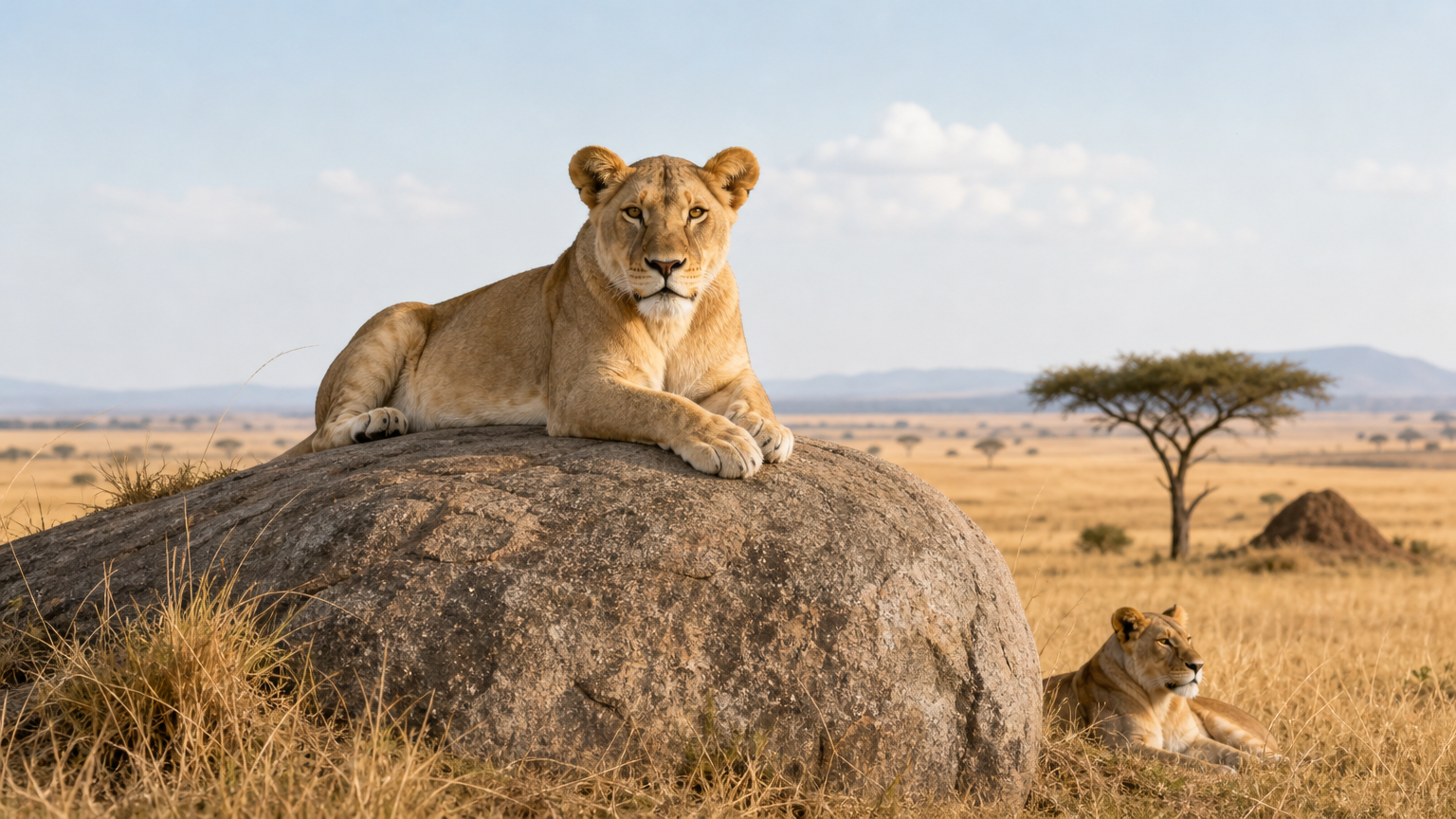
The Mara and the Serengeti are one wildlife system split by a border, and your itinerary has to respect that border even though the animals do not.
How the two parks compare
| Masai Mara (Kenya) | Serengeti (Tanzania) | |
|---|---|---|
| Size | About 1,500 sq km | About 14,750 sq km |
| Known for | Concentrated big cat viewing, Mara River crossings | Space, variety, migration present across much of the year |
| Landscape | Rolling grassland and the Oloololo escarpment | Endless plains and granite kopjes |
| Gateway | Nairobi, by road or airstrip | Arusha or Kilimanjaro, then road or airstrip |
The Mara is smaller, so sightings come quickly. The Serengeti is far larger, so it rewards more days and a base in more than one area.
When one park is enough
With four or five days, pick one. A Mara-only trip such as our 4-day Mara stay from $990 gives you more game drives than a rushed two-country version would.
Step 1. Decide how you will cross the border
Plan the crossing as a transfer day, not a drive between parks. Most travelers do not cross at the parks' shared boundary. The practical crossings sit elsewhere, and the route runs through Nairobi or the Isebania/Sirari post.
Fly or drive
Driving means roughly 5 to 6 hours from the Mara to Nairobi, then 6 to 8 hours to Arusha through the Namanga border post, then about 8 hours to the central Serengeti. That is three long days. The alternative is to fly out of the Mara to Nairobi, take a scheduled flight to Kilimanjaro, and continue by road or light aircraft. This costs more but saves a day or two.
Flying the long transfer costs more, but it buys back one or two full days of game viewing.
What changes at the border
Expect to change vehicle and guide when you change country. Your operator should arrange both sides in advance. Check entry rules for Kenya and Tanzania on your government's travel site before booking. Both countries use online entry systems for many nationalities, and the rules change.
Step 2. Time the trip to the migration
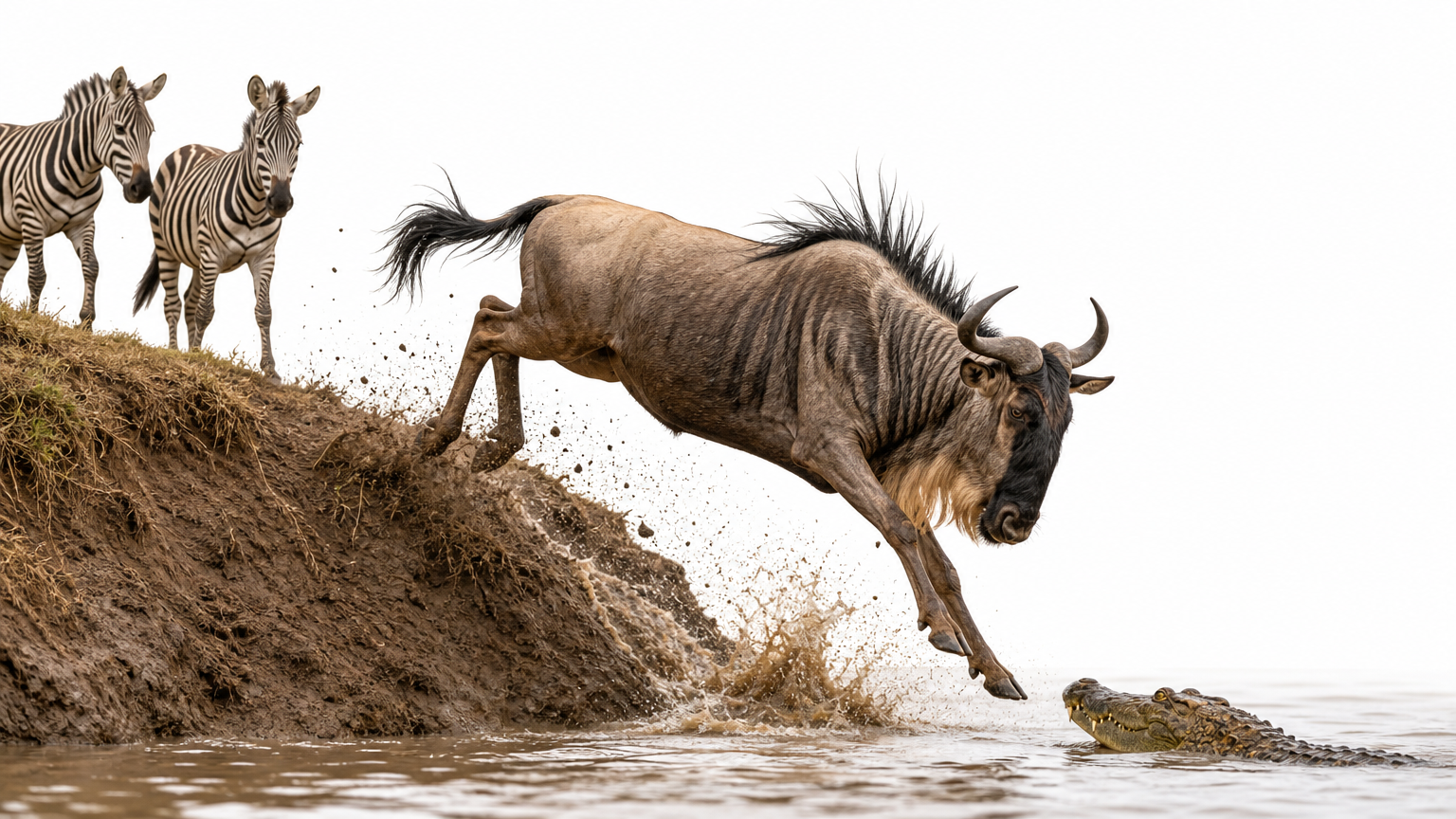
Go between late July and October if you want river crossings, and January to March if you want calving season. The herds move in a loop, so your dates decide where the action is.
Month by month
| Months | Where the herds are | What you see |
|---|---|---|
| Jan to Mar | Southern Serengeti | Calving, predators hunting newborns |
| Apr to May | Central and western Serengeti | Long rains, fewer vehicles, lower rates |
| Jun to Jul | Western and northern Serengeti | Herds massing toward the north |
| Late Jul to Oct | Northern Serengeti and Masai Mara | Mara River crossings, peak season |
| Nov to Dec | Moving south again | Short rains, green plains |
Where to be if you want both parks
If you travel from July to October, book early and spend time in both, because the herds can sit on either side of the border. In calving season, put your Tanzania nights first and keep the Mara for big cats. Our Kenya and Tanzania packages are built around dates like these.
Step 3. Match trip length to your budget
Allow at least three nights in each park, plus transfer time. That puts the minimum for a good two-country safari at about 7 to 8 days. Cost then follows the accommodation tier and the season.
How to split the nights
A common nine-day shape is one night in Nairobi, three in the Mara, one transfer night near Arusha, two in the Serengeti and one at Ngorongoro Crater. Treat it as a pattern, not a fixed route. If you want more Serengeti time, add days to Tanzania rather than squeezing the Mara.
Itineraries and from-prices
| Itinerary | Length | Covers | From-price |
|---|---|---|---|
| 8-Day Magical Kenya & Tanzania Safari | 8 days | Kilimanjaro views, Ngorongoro, Serengeti, Mara | $2,711 |
| 9-Day Ultimate Kenya and Tanzania Safari | 9 days | Migration country, Ngorongoro, Serengeti, Mara, Lake Nakuru | $3,429 |
| The Grand East African Luxury Safari | 10 days | Mara, Serengeti, Ngorongoro, luxury stays | $5,405 |
Going from the 8-day to the 9-day trip adds $718 to the from-price for an extra day and Lake Nakuru. Moving up to the 10-day luxury trip adds $1,976 over the 9-day one for a slower pace and a higher accommodation tier.
More days and a higher tier raise the price, so decide which of the two matters more before you compare quotes.
What moves the price
Season matters most: July to October costs more. Accommodation tier comes next, from tented camps to luxury lodges. Group size matters too, since a private vehicle splits across more people. Finally, add the cross-border transfer, whether by road or flight, and park fees in both countries.
Step 4. Send a quote request and book
Send an operator your dates, group size, parks and travel style, and expect a tailored itinerary and quote back. At Extra Miles that is a three-step process, and we respond to enquiries within 24 hours.
What to include in your request
Copy this template and fill in the blanks:
Subject: Masai Mara and Serengeti safari quote

Travel dates: (flexible window, e.g. late August)
Travelers: (number, ages if children)
Length: (e.g. 8 to 9 days)
Parks: Masai Mara, Serengeti, Ngorongoro Crater (yes/no)
Style: private, mid-range or luxury
Budget per person:
Interests: big cats, migration, photography, birding
Questions: How is the border crossing handled? Road or flight transfer?
What to check before you pay
Confirm in writing how the border crossing and vehicle change are handled, what the quote includes, and which accommodation tier you are getting. Ask about the vehicle (a pop-up roof 4x4 is standard for private trips) and the cancellation terms. Ask whether the quote lists park fees separately or includes them.
A clear quote names every transfer, vehicle, lodge and fee, so ask for that before you pay a deposit.
Ready to plan your two-country safari
A Masai Mara and Serengeti safari works when you treat the border as a planned transfer, match your dates to the herds, and give each park three nights or more. Seven to ten days covers most travelers, and your accommodation tier decides most of the price.
If you want a route built around your dates, group and budget, request a tailored quote and our Nairobi team will send back a private itinerary.