
 中文
中文 عربي
عربي Français
 Nederlands
 Deutsch
 Italiano
 Português
 Español
Masai Mara safari rates run from about $650 per person for a basic three-day group trip to more than $6,000 for a five-day luxury stay. The three biggest swing factors are your lodge tier, your travel month, and how many park-fee days your itinerary triggers. A rate is the total per-person price of the trip: lodging, meals, game drives, vehicle, guide, and the reserve's entry fee, usually quoted for two people sharing and before international flights. For a mid-range trip, plan on roughly $400 to $600 per person per day all in.
This guide breaks that rate into its parts so you can build your own estimate. You will see what park fees cost by month, what each lodging tier charges, how transport and extras add up, and what complete three, four, and five-day trips tend to cost. Every figure is a typical range, so treat it as a planning budget and not a final quote.
Extra Miles Unique Adventures has run private safaris out of Kenya since 2007, and the first question most guests ask us is what the Mara will cost. The answer is never one number. It is a sum of five or six parts, and once you can see them, comparing quotes gets much easier.
Why Masai Mara safari rates are higher than other parks
Masai Mara safari rates are higher because you pay for a premium reserve, a limited number of beds, and demand that peaks in a few months. The same quality of trip in another Kenyan park usually costs less. Our three-day Amboseli safari, for example, starts from $609, and a three-day Mara trip typically costs more than that at a comparable lodge tier.
What a safari rate actually includes
A rate is a bundle, not a room price. Two quotes can differ by $500 per person simply because one includes items the other leaves out. A standard full-service rate covers:
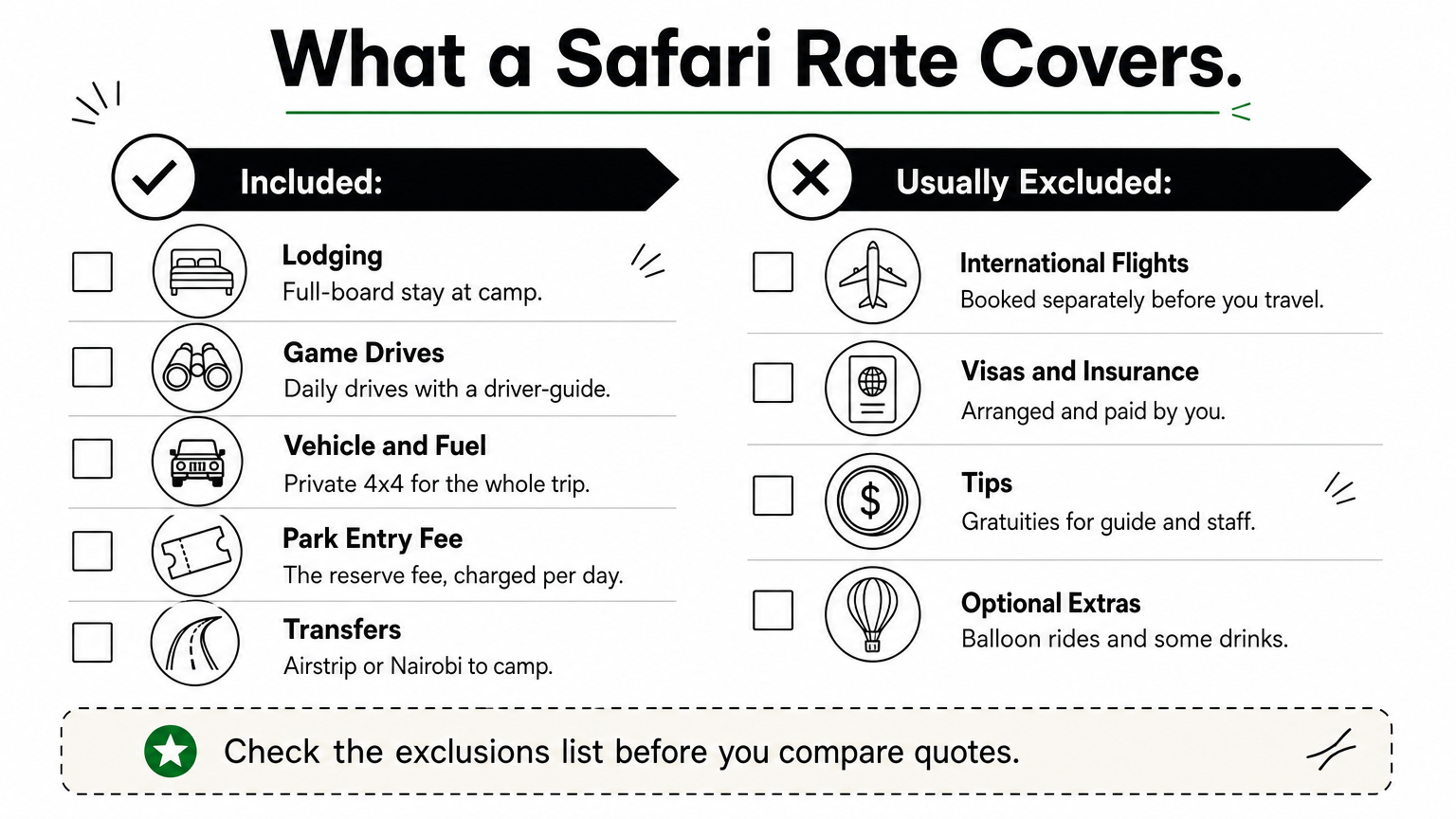
- Lodging on a full-board basis
- Daily game drives with a driver-guide
- A safari vehicle and fuel
- The reserve's entry fee
- Transfers between the airstrip or Nairobi and your camp
Usually excluded are international flights, visas, travel insurance, tips, and optional activities such as balloon rides. Some lodges also charge separately for drinks. Always check the exclusions list before you compare.
Why the Mara costs more than other Kenyan parks
Park fees are the clearest reason. Before 2024, non-resident adults paid about $80 plus tax per day. Since then the fee has been $100 per day in the first half of the year and $200 per day from July to December. That alone adds $600 or more to a three-day trip in peak months.
Supply is the second reason. There are only so many camps and lodges inside and beside the reserve, and they fill up during the Great Migration, which brings the river crossings between roughly July and October. Add the cost of running remote camps, paying staff, and funding conservation, and the premium makes sense.
The Mara is priced like a scarce, protected resource, because that is what it is.
How to calculate your Masai Mara safari cost
Your Masai Mara safari cost is the sum of four things: park fees, lodging, transport, and extras. Add them per person, multiply by the number of days, and you have a working budget. Each piece has a typical range.
Park fees and the entry clock
Park fees depend on your residency and the month. This table shows the non-resident adult rates that apply to most international guests.
| Visitor | January to June | July to December |
|---|---|---|
| Non-resident adult | $100 per day | $200 per day |
| Non-resident child | Reduced rate | Reduced rate |
| Kenyan citizen or resident | Charged in Kenyan shillings, far lower | Charged in Kenyan shillings, far lower |
Fees are charged per day of entry, and the clock has been enforced strictly. Some visitors report a 12-hour window instead of a full 24 hours, so a 6 a.m. entry and a late-afternoon exit the next day can trigger an extra fee. Rules shift, so ask your operator in writing how many fee days your itinerary uses. Camps in private conservancies also charge a conservancy fee, either built into the nightly rate or added as a separate line.
Lodging tiers per person per night
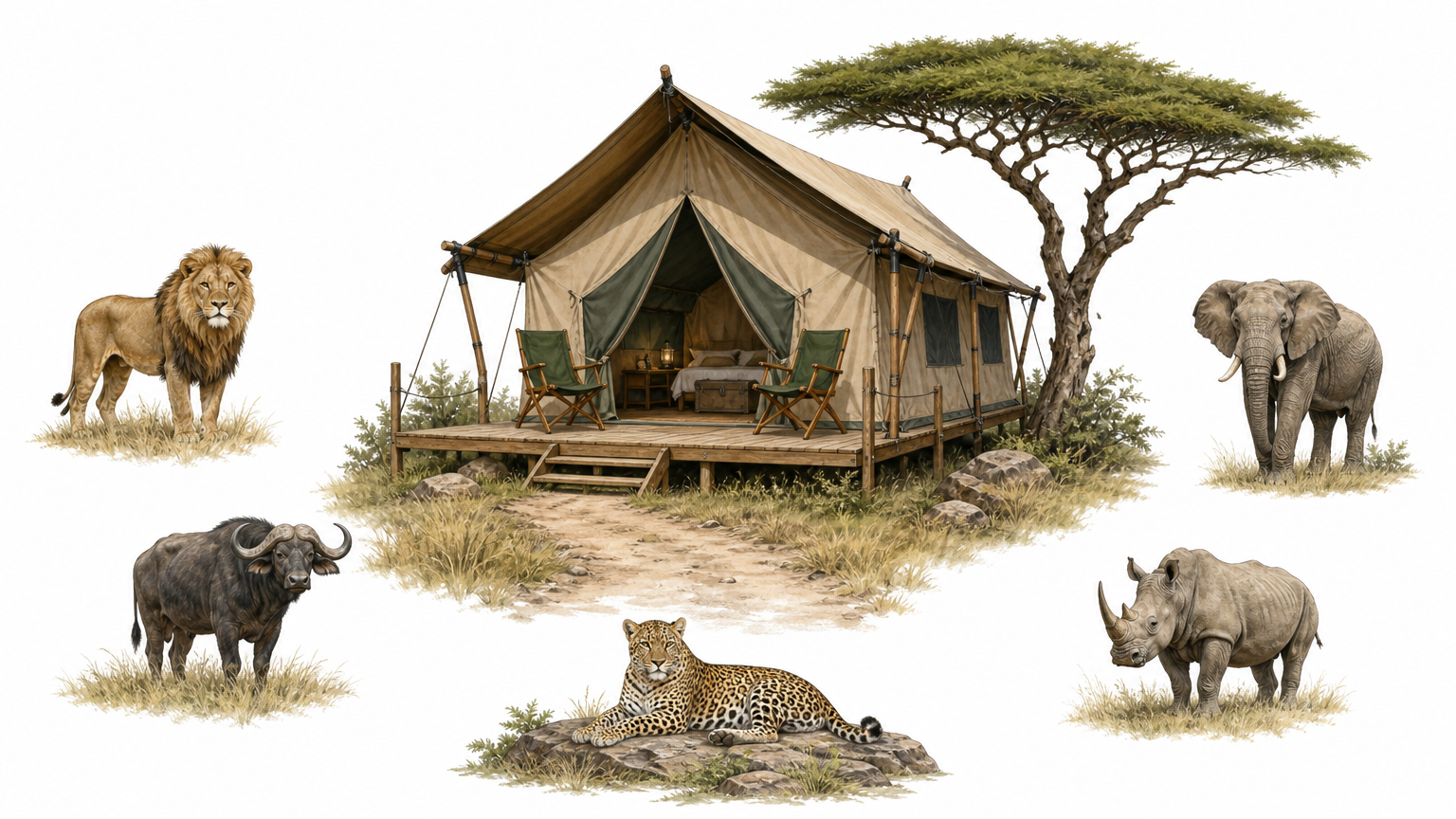
Lodging is the largest part of your Masai Mara safari rates, and the tier you choose moves the total more than any other decision.
| Tier | What you get | Typical rate per person per night |
|---|---|---|
| Budget | Basic camps, often outside the reserve, shared facilities or simple tents | $100 to $200 |
| Mid-range | Lodges and tented camps with private bathrooms, full board | $200 to $450 |
| Luxury | Intimate tented camps, prime river locations, premium guiding | $500 to $1,200+ |
Rates are quoted per person sharing. Solo travelers often pay a single supplement. At one established full-service camp, published nightly rates run roughly $550 to $700 in April and May and $800 to $1,200 at peak, so season matters as much as tier.
Transport and extras
Transport is priced per vehicle, not per person, which is why group size changes your rate so much.
| Item | Typical cost |
|---|---|
| Road transfer from Nairobi | 5 to 6 hours each way |
| Safari vehicle (4x4 Land Cruiser) | $250 to $275 per vehicle per day |
| Return flight from Nairobi (Wilson Airport) | $300 to $450 per person, about 1 hour |
| Hot air balloon flight | $415 to $500 per person |
| Maasai village visit | $30 to $50 per person |
| Bush dinner | From about $60 per person |
Two travelers sharing a private vehicle each carry half the daily cost. Four travelers carry a quarter. Flying saves a full day of driving on short trips, so a three-night safari often justifies the airfare.
Add four numbers per person per day, and you have a realistic Masai Mara budget.
Masai Mara safari prices by season and trip length
Masai Mara safari prices swing by about 30 to 50 percent between the green season and the Migration peak. Trip length then multiplies that figure, so it helps to see both together.
How seasons change the rate
Peak runs from July to October. The wildebeest are in the Mara, lodges are full, and the park fee is $200. November and December keep the high fee, but lodging often softens, apart from festive-date surcharges. January to March is the sweet spot for many guests, with dry weather, the $100 fee, and shoulder lodging rates. April to early June is the green season, with the lowest rates and occasional muddy roads.
| Season | Months | Lodging | Park fee |
|---|---|---|---|
| Peak | July to October | Highest | $200 |
| Late year | November to December | Mid to high | $200 |
| Shoulder | January to March | Mid | $100 |
| Green | April to early June | Lowest | $100 |
Rates by trip length
These ranges assume two people sharing, a private road transfer from Nairobi, full board, and park fees included. They exclude international flights.
| Trip | Budget | Mid-range | Luxury |
|---|---|---|---|
| 3 days, 2 nights | $650 to $1,100 | $1,100 to $1,800 | $1,800 to $3,000+ |
| 4 days, 3 nights | $900 to $1,500 | $1,500 to $2,500 | $2,500 to $4,500 |
| 5 days, 4 nights | $1,200 to $2,000 | $2,200 to $3,200 | $3,500 to $6,000 |
Three days works if you are short on time. Four days gives you enough drives to see the Mara at a relaxed pace.
A worked example
Take a four-day mid-range trip for two sharing one vehicle, priced per person:
- July peak: 3 nights at $350 is $1,050, 3 park-fee days at $200 is $600, and vehicle share at $540. Total: about $2,190.
- January: 3 nights at $280 is $840, 3 park-fee days at $100 is $300, and vehicle share at $540. Total: about $1,680.
The same trip costs roughly $500 less per person in January, and the wildlife viewing is still excellent.
Moving a four-day trip from July to January can save around $500 per person.
How to lower your Masai Mara safari rate
You can lower your Masai Mara safari rate most by changing the month, the vehicle share, and the lodging tier, in that order. These moves keep the experience intact. Cutting game drives or days at the park rarely does.
Time the trip and trim the extras
Travel in the shoulder or green season, and you cut lodging and the park fee at once. If you must visit during the Migration, book early, because the best camps sell out. Spread the vehicle cost across more guests, since transport is charged per vehicle. Fly in only when the saved day is worth $300 to $450.
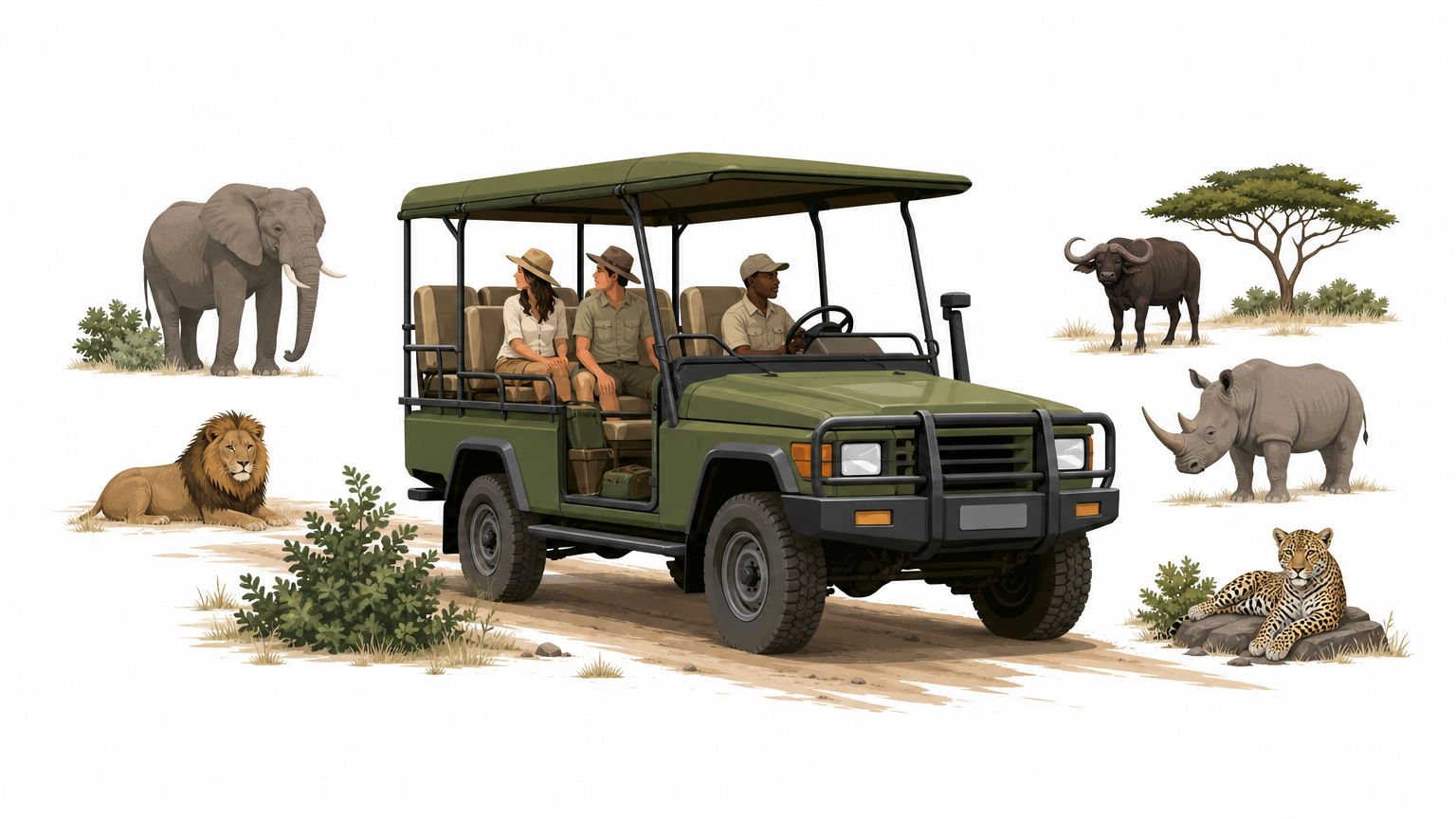
Staying outside the reserve is cheaper, but you may drive an hour or more each way to reach the Mara Triangle, where the river crossings happen. You can also pair the Mara with another park, such as our four-day Masai Mara and Lake Nakuru safari. Skipping paid extras like balloon flights trims $400 or more per person.
What to check in every quote
The cheapest quote is often missing something. Before you compare Masai Mara safari rates side by side, confirm:
- How many park-fee days are included
- Whether the vehicle is private or shared
- Whether drinks, conservancy fees, and airstrip transfers are included
- Any single supplement for solo travelers
- Child rates and age cutoffs
If a quote omits park fees, add $300 to $600 per person for a three-day trip before comparing.
A quote is only cheap if it covers the same things as the others.
Planning your Masai Mara budget
Start with the month, because it sets the park fee and shapes the lodging rate. Pick a tier and a length next, then add vehicle and extras. For most couples, a four-day mid-range trip lands between $1,500 and $2,500 per person, with the low end in the shoulder and green seasons.
Ask for itemized quotes so you can see where each dollar goes. If you want help turning these ranges into a real itinerary, share your dates and budget with our team and we will build a private Mara safari around them, with park fees shown as their own line.